
Financial Planning as Your GPS for Life


When it comes to financial planning, there’s a gap between what many Americans want and what they act on. While most people know they should have a plan, far fewer actually put one into action. The problem often comes down to clarity. Between the noise of market moves, inflation changes, shifting tax laws, interest rate decisions, and geopolitical uncertainty, it can be difficult to determine what to listen to. The result is often financial plan paralysis. The real challenge is not access to information. It is knowing what to do with it, and how to translate it into a formal plan that aligns with your life and your purpose.
That is where a team of financial planning experts can come in. Rather than focusing on every headline in the news or things beyond your control, a good financial planner serves as someone with tools and resources to help you create and adjust your financial plan. This plan acts as a NorthStar or roadmap to guide your life rather than the noise around it.
Planning Matters More Than Predictions
Think of financial planning the way you think about navigation. Before GPS, you printed directions, mapped your route, and hoped for no surprises. If an accident closed the highway, you were left to figure it out alone. Today’s tools monitor conditions in real time and reroute when the unexpected happens, while keeping your destination locked in.
A financial plan works the same way. The goal is fixed but sometimes the route adjusts. What separates people who reach their financial destination from those who fall short is working with an advisor who serves as a trusted, informed voice to navigate these financial decisions.
Skipping the financial planning process carries a cost, even when that cost is invisible in the short term. Without this financial GPS, you could arrive five years late to financial independence because of unaddressed gaps in savings strategy, asset allocation, or debt management.
The most common gaps that derail financial outcomes are often quieter oversights:
- Failing to account for tax law changes that alter how much you keep versus how much you owe.
- Devaluing the role of asset location plays into your long-term strategy.
- Holding an asset allocation that no longer reflects your timeline or risk tolerance.
- Making decisions based on emotion and noise instead of sticking to your plan as your financial Northstar.
- Carrying debt at an interest rate that outpaces your investment returns.
- Underestimating healthcare and inflation costs later in life.
- Missing contribution windows for tax-advantaged accounts that lead to compounding, meaningful losses over time.
While each of these gaps are manageable, when caught early, they can compound over time.
Constructing a Strong Financial Plan
Your advisor will work with you to build and maintain a financial plan that connects your current financial reality to your future goals. Serving as your destination, it offers a clear review of several key elements:
1. Cash Flow and Financial Position
Before investment strategy, tax planning, or legacy decisions, you need a clear picture of what is coming in, what is going out, and where there are gaps. This means understanding your monthly obligations, your savings potential, and whether your current trajectory supports your stated goals. As part of this process, it is important to ensure that debt is managed properly, and there is an emergency fund as a foundation. The numbers tell a story that everything else is planned around.
2. Aligned Investment and Retirement Strategy
Effective investment strategy requires understanding how you feel about volatility, when you will need access to your assets, what role those assets need to play at different life stages, and how your allocation should shift overtime. Your investment strategy should be in alignment with an overall retirement strategy or any other long-term goals.
3. Tax Planning
Tax planning should go beyond April. The decisions you make throughout the year have compounding tax consequences. A plan should look proactively at where your assets are located, your sources of income, how you sequence withdrawals in retirement, and the potential tax consequences of those decisions. Tax planning should also explore opportunities for Roth Conversions and Charitable Planning as options to help mitigate the effect of taxes.
4. Risk Management and Estate Considerations
Proper insurance coverage, beneficiary designations, and estate planning documents are the structural supports of a financial plan. These are areas most commonly neglected. A plan that builds wealth effectively but fails to protect it or fails to direct it according to your wishes is incomplete. These elements require regular review, particularly after major life events such as marriage, divorce, the birth of a child, or the death of a family member.
While these areas serve as a basis for a plan, they don’t represent all that can happen throughout your life, which is why it’s important to make considerations for family planning, education, housing, and other personal and professional changes and goals. Each of these should be considered throughout the life of your plan.
Staying Nimble Without Losing Focus
Life does not follow a straight line. A job change, a health event, a market downturn, or a new tax law can alter the landscape and require a response. The question is whether your response is reactive and emotional, or informed and strategic. This is where an experienced advisor helps you maintain the discipline of looking at your full financial picture when circumstances make it tempting to focus only on the disruption in front of you. They can distinguish between changes that require a meaningful adjustment to the plan and market noise that requires no action at all.
Our advisors can help craft and maintain a plan that reflects cash flow, goals, tax situations, and timelines by translating the full picture of your financial life into a structured, actionable plan.
Begin your journey
Have questions?
Speak with an financial expert.
Recent Articles
-
Two the Point – A Good Economy Isn’t Enough
A strong economy doesn’t guarantee strong investment opportunities. Watch for key insights on navigating today’s market.
-

Tax Planning Moves to Consider Before Year-End
Tax planning starts long before filing season. Discover key year-end tax strategies, retirement contribution opportunities, charitable giving tips, and other…
-
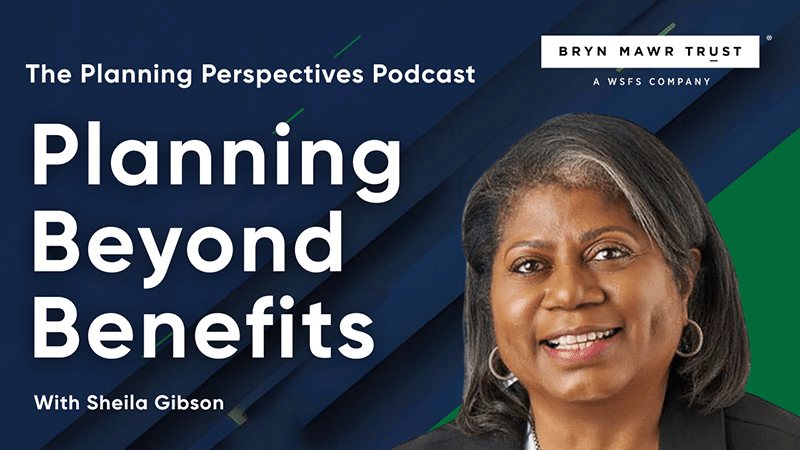
Planning Beyond Benefits (Ep. 28)
In this episode, Kate Duffy sits down with Sheila Gibson, Senior Wealth Advisor at Bryn Mawr Trust, to discuss the…
Recent Insights
-

Tax Planning Moves to Consider Before Year-End
Tax planning starts long before filing season. Discover key year-end tax strategies, retirement contribution opportunities, charitable giving tips, and other financial moves before December 31.
-
Planning Beyond Benefits (Ep. 28)
In this episode, Kate Duffy sits down with Sheila Gibson, Senior Wealth Advisor at Bryn Mawr Trust, to discuss the role of special needs trusts and guardianships in…